Hi — the recruitment team at At Inn here.
Welcome to Part 2 of our conversation with Sumarni, a member of At Inn's Cross Border Relocations Japan (CBRJ) team.
In Part 1, Sumarni talked about the language barriers and paperwork she wrestled with as an international student, and what made her want to join At Inn and become an ally to other people moving to Japan.
This time we get into the day-to-day. She walks us through what it's actually like to accompany a client to their new apartment, the city hall counter, and the bank — and how she bridges cultural gaps so that clients feel looked after, even when things don't go to plan.
▶ Haven't read Part 1 yet?
/assets/images/24690210/original/c07e088d-d90a-4896-bcd3-ba90408ad546?1790070874&w=1440)
[Employee Interview] From Feeling Lost in Japan to Helping Others Find Their Way | Part 1 | 株式会社アットイン
Profile
Sumarni
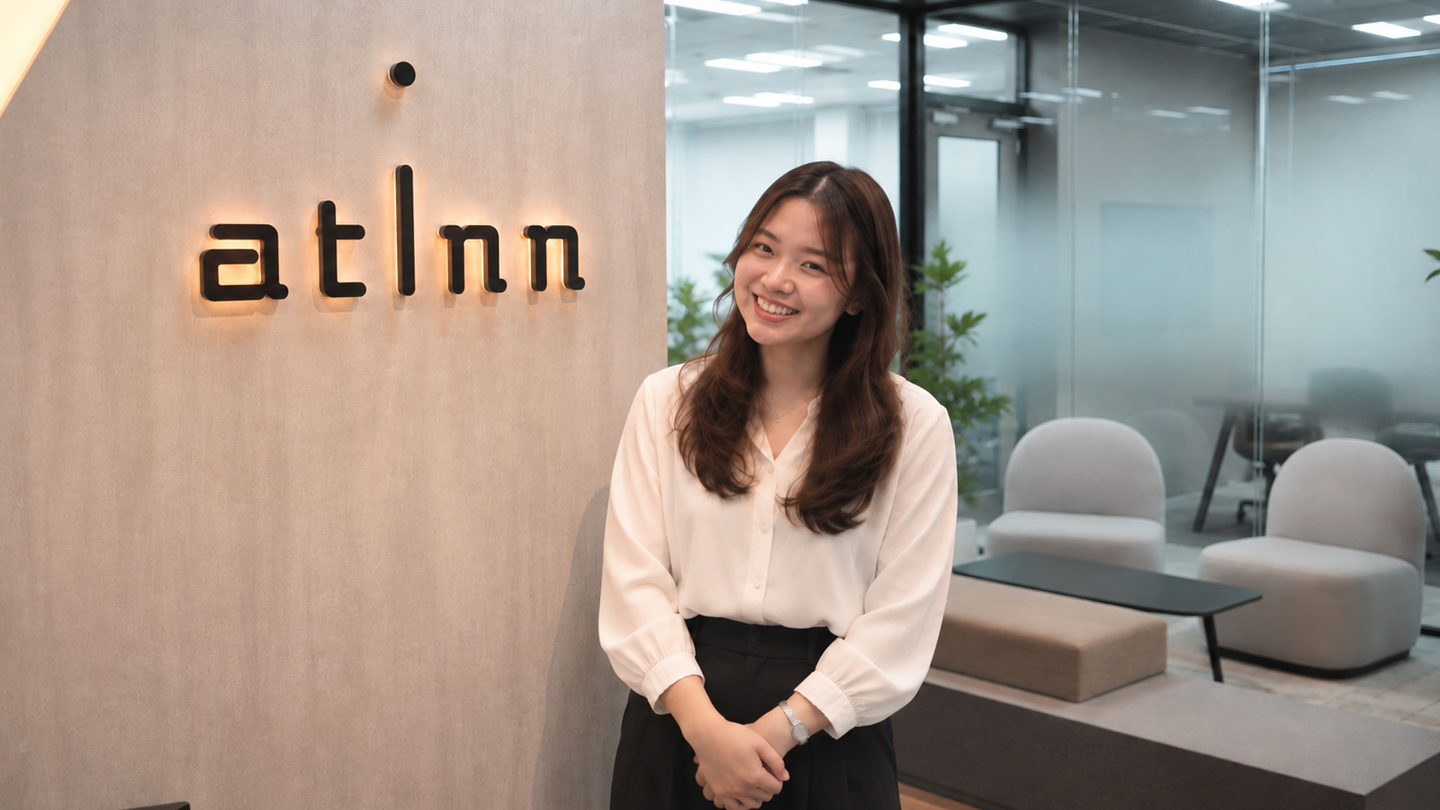
Originally from Indonesia, Sumarni is in her sixth year in Japan and her third at At Inn, which she joined straight out of university.
Her connection with the country started in sixth grade, when she lived here with her family. After finishing high school back in Indonesia, she returned to Japan for university, studying international law in the Faculty of International Relations.
She spent most of her student life in an English-speaking environment and passed JLPT N1, the highest level of the exam — then found out how little textbook Japanese resembles the real thing. Finding an apartment and getting through the admin of daily life in an unfamiliar country turned out to be just as hard.
Those experiences are what brought her to At Inn.
Today she supports engineers and other skilled professionals relocating to Japan, from finding them a home to walking them through registration at city hall and setting up a bank account — everything it takes to get a new life off the ground.
Keys, City Hall, and a Bank Account — All in One Day

Q. What does international lifestyle support actually involve?
We handle the whole journey for people moving to Japan, from finding somewhere to live to getting every formality out of the way so they can start their new life with confidence.
No two days look the same, but the work splits roughly in two. Some days are field days, where I'm out with clients in person. Others are desk days — preparing documents, sorting out housing, and lining up support that's coming later.
Q. Walk us through a field day.
I meet the client at the apartment we've found for them and run a move-in orientation.
Inside, I show them how the air conditioner and water heater work, and go over the everyday things — including how household waste gets sorted and put out, which nobody warns you about.
Once we've been through the apartment, we head to city hall together to register their address. Then it's on to a phone shop for a SIM, and we finish at the bank, setting up the account their salary will go into.
The goal is that by the time we say goodbye, everything's in place and they can start living here without anything hanging over them.
Q. Apartment, city hall, phone shop, bank — is that order deliberate?
Completely. Skip a step and you'll get turned away at the next counter.
It runs like this:
- Register the address at city hall.
- Use the registered address to get a phone contract.
- Use the address and the phone number to open a bank account.
Working that out on your own, days after landing in a country you don't know, is genuinely hard. Get the order wrong and you're sent home empty-handed, losing time you can't really afford in your first week.
So we stay with them, take it one counter at a time, and keep the whole thing as painless as we can.
Q. And desk days?
That's when we're talking with clients who are still getting ready to come, answering their questions and arranging housing.
Mornings usually start with email — proposing properties to clients, going back and forth with management companies.
Finding a place that fits what someone wants is only half of it. Often we're also negotiating with the management company to make the terms work within Japan's rental system.
Then the team meets to share updates and make sure nobody's support is falling through the cracks.
Afternoons are often video calls with clients who are still overseas. I'll ask what's worrying them and answer the usual questions — which neighborhoods are convenient, what they should sort out before they fly. It's a chance to clear things up early, long before we're standing next to them at a counter.
"Because That's the Rule in Japan" Is Never the Answer

Q. What catches clients off guard about the admin side of things?
Mostly how much of it has to be done in person, and how many documents get checked.
If you come from somewhere that handles all of this in one app, it's hard to understand why you're taking a number and sitting in a waiting room with three different forms of ID.
Thinking "this is nothing like home" is a completely fair reaction. I had the same culture shock when I arrived, which means I can say "I felt exactly the same" and mean it.
What I don't want is for anyone to feel like they're being left to figure it out alone.
Q. How do you handle those differences in culture and mindset?
We never fall back on "that's how it's done in Japan, so that's that."
Instead we explain why a step exists, without dismissing where the client is coming from.
When I started this job, I assumed sharing a language would be enough. Out in the field I realized pretty quickly that translating a rule doesn't make anyone accept it.
So when someone says "we'd never do this back home," I start by acknowledging that. Something like, "I know — compared to how it works in your country, this must feel needlessly complicated."
Then I explain what it buys them later. Registering an address and confirming their identity is what lets their salary arrive safely, and it makes everything downstream easier — applying for a credit card, for instance.
Housing works the same way. In some countries, picking an apartment two weeks before you move is perfectly normal. Here, screening and paperwork can take a month. If we don't flag that difference early, and explain the reason behind it, someone can land in Japan with nowhere to live.
Our job isn't to make people swallow something because it's "the Japanese way." It's to make the differences legible, so they can start their new life on solid ground.
Q. Is there a moment that really brought a cultural gap home to you?
Once, while I was showing a client around their new apartment, they asked whether they could hose down the whole toilet floor with water.
In Japan, apartments usually keep the bathroom and toilet in separate rooms. Where this client grew up, the toilet and shower shared a room, so washing the entire floor was just how you cleaned it.
Do that in a Japanese apartment, where the toilet floor isn't waterproofed, and the water goes straight through to the unit below.
They weren't doing anything careless — they were checking whether a completely ordinary habit still worked here.
It stuck with me as a reminder not to measure everything against my own defaults. Rather than thinking "obviously you can't do that," we need to picture how someone actually lived at home, and get ahead of the places where that's going to collide with life here.
Ending the Day Without Worry, Even When Plans Fall Apart

Q. What's your priority when something goes sideways?
I ask myself what this person needs in order to go to bed tonight without anything weighing on them.
Some days an appliance in the apartment doesn't work. Some days a counter at city hall takes three times as long as it should.
Even then, we're not going to say "our day ends at six, so you'll have to take it from here."
If we can't finish everything, we make sure the client knows exactly what's done and what's coming. "Everything that needed you today is finished, so there's nothing left to worry about," or "Tomorrow we'll pick up here, then here."
Once someone can see the next steps clearly, the evening stops being anxious.
Q. Does the relationship continue once the initial setup is done?
It does. We keep helping with the small things that surface after life here has started.
Even when all the formalities are behind them, plenty of clients get unnerved by an official-looking envelope full of dense Japanese and have no idea what it wants from them.
When that happens, we open the letters together and go through them one by one. Often it's simply, "This is a notice from the ward office — there's nothing to pay."
We don't do that because a manual says to. We do it because we're not going to look away from someone who's stuck. That instinct runs through the whole team.
Q. Three years in, what's been the most rewarding moment?
It's when the support wraps up and a client smiles and says, "I'm so glad you were here."
Because we're with people through the small, practical, unglamorous parts of settling in, I think we end up being one of the most dependable presences they have in those first weeks.
Starting over in another country is a turning point for anyone. Being there for it, and hearing that from someone directly, is what makes me glad I chose this work.
Turning Your Own Struggles Into Someone Else's Strength
Q. What would you like to take on next within the CBRJ team?
I'd like to build business etiquette training for professionals who've just arrived, on top of the lifestyle support we already do.
When I talk to people relocating here for work, the paperwork isn't their only worry. A lot of them are just as nervous about how to operate in a Japanese workplace.
Writing emails, greeting people, judging how formal to be, knowing how to handle colleagues — none of it is obvious from the outside.
I had all the same questions when I started working here, and I picked up the answers slowly, by getting things wrong. Clients still ask me how they should phrase something or how to behave in a particular situation.
I'd like to turn what I learned the hard way into something that helps people feel steady in their careers here, not just in their daily lives.
Q. Any last words for people thinking about joining the CBRJ team?
Perfect language skills matter far less than actually wanting to help the person you're with.
When I joined At Inn out of university, I knew nothing about real estate and was still self-conscious about speaking Japanese.
Working directly with clients is how I picked up the Japanese you'll never find in a textbook, along with the professional knowledge the job takes.
Speaking a language fluently and understanding how someone feels are two different skills.
If you respect other cultures and you want to be useful to people, then every hard stretch you've had abroad — every time you stood there unable to make yourself understood — turns into something you can offer someone else.
I'd love it if you joined us in being that first ally for people taking their first step in Japan.
The frustration of not being able to communicate. The loneliness of facing an unfamiliar country by yourself.
Sumarni took all of that and turned it into the ability to steady the person standing in front of her.
You don't need flawless language skills or a background in real estate to start. If you want to be useful to people who need it, everything you've been through living in Japan can become something that holds someone else up.
Want to be the first ally for someone beginning a new life here?
We'd love to hear from you.
/assets/images/3707340/original/34c4b075-7055-48d5-80c0-9ae597da0f5c?1643016571)

/assets/images/3707340/original/34c4b075-7055-48d5-80c0-9ae597da0f5c?1643016571)

/assets/images/3707340/original/34c4b075-7055-48d5-80c0-9ae597da0f5c?1643016571)